
Why artificial light at night disrupts your sleep
If you sleep for several hours but wake up tired, the problem may not be the amount of sleep.
It may be the light.
Artificial light at night interferes with the body's natural mechanisms.
It delays the shutdown process and compromises the real quality of rest — even when you sleep enough.
To simplify this, there is a simple logic.
We call it the Smart Light Rule. Before thinking about routines, supplements or perfect schedules, this is where it all begins.
6MIN READDay vs Night
The human body responds to light like an internal clock. During the day, exposure to natural light stimulates alertness, sustains concentration and supports physical and mental performance. It is this light that tells the body it is time to be awake and active.
As the day ends, the body naturally expects a reduction in this stimulus. When this happens, the deceleration process begins, preparing the mind and nervous system for rest.
The problem arises when this transition is broken. Intense artificial light or prolonged screen exposure at night sends contradictory signals to the brain. Instead of shutting down, the body stays in active mode.

The result is simple. Difficulty falling asleep, lighter sleep and waking up tired even after several hours in bed.
3 common mistakes at nightfall
The quality of rest begins long before you close your eyes. These are three of the most common mistakes at nightfall:
Using white or strong LED light indoors
Using screens very close to the eyes right up until bedtime
Not creating a transition between the active day and the restful night
These stimuli keep the brain in daytime mode when, in reality, it should already be switching off.
Intense white light and constant screen exposure send alert signals to the nervous system. Instead of initiating the natural deceleration, the body stays in a state of vigilance.
The brain interprets the environment as if it were still daytime. The result is simple. Shutdown is delayed, sleep becomes more superficial and rest stops being truly restorative.
Even sleeping for several hours, the body doesn't recover as it should.
The Smart Light Rule
The right light, at the right time.
Natural light exposure
Balanced light without excess brightness
Warm, low and indirect light
When light follows the rhythm of the day, the body stops living in a constant state of alert.
The right exposure in the morning wakes and activates. Balanced light in the afternoon sustains energy and focus. And the gentle reduction at nightfall creates the right space for rest.
Without unnecessary visual noise, the body understands what to do at each moment. No effort, no internal conflict.
The transition to night happens naturally. And rest stops being something you force — and becomes something that simply happens.
Why orange lenses help calibrate the end of the day
At night, completely eliminating artificial light isn't always realistic.
Screens, urban lighting and daily tasks remain present. The world doesn't switch off just because the day is over.
This is where orange lenses come in. They help reduce the impact of artificial light, soften visual stimulation and facilitate the natural transition to rest.
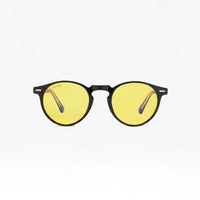
The essential tool for quality recovery
They don't block the world. They help the body switch off at the right moment.
Conclusion
Artificial light at night is not neutral.
Used incorrectly, it disrupts sleep, recovery and the energy of the following day.
When you apply the Smart Light Rule, the body returns to its natural rhythm.
You sleep better.
You wake up lighter.
And you feel the difference throughout the day.
